
Melbourne is a useful starting point for the Great Ocean Road, inland mountains and smaller coastal towns. The best itinerary depends less on how many places fit on a map and more on how many days you can spend driving, walking and resting. For a budget campervan rental, plan the route and overnight stops before comparing quotes.
Vehicle availability and rates change by dates and depot. Compare the complete cost for your party, including any one-way charge, protection options, equipment, bond and kilometre conditions. A compact camper may suit two travellers, while a larger group needs enough seats and suitable sleeping space for everyone.
Plan your pickup and first night
The listed Melbourne depot is in Ringwood, east of central Melbourne. Check the current address and hours with the rental provider, then allow time for your transfer, vehicle inspection and shopping. If you have just arrived on a long flight, consider an easy first day instead of setting off on a lengthy coastal drive.
Before leaving, check how to use the equipment, what is included and where the vehicle must be returned. Ask about tolls, fuel and cleaning requirements. An early plan for the last night can prevent a rushed return across the city.
Make the first day easier
Choose a campground that you can reach with time to spare. If you are collecting after a long flight, make the initial grocery shop and vehicle familiarisation part of the plan instead of squeezing them between long driving stages.
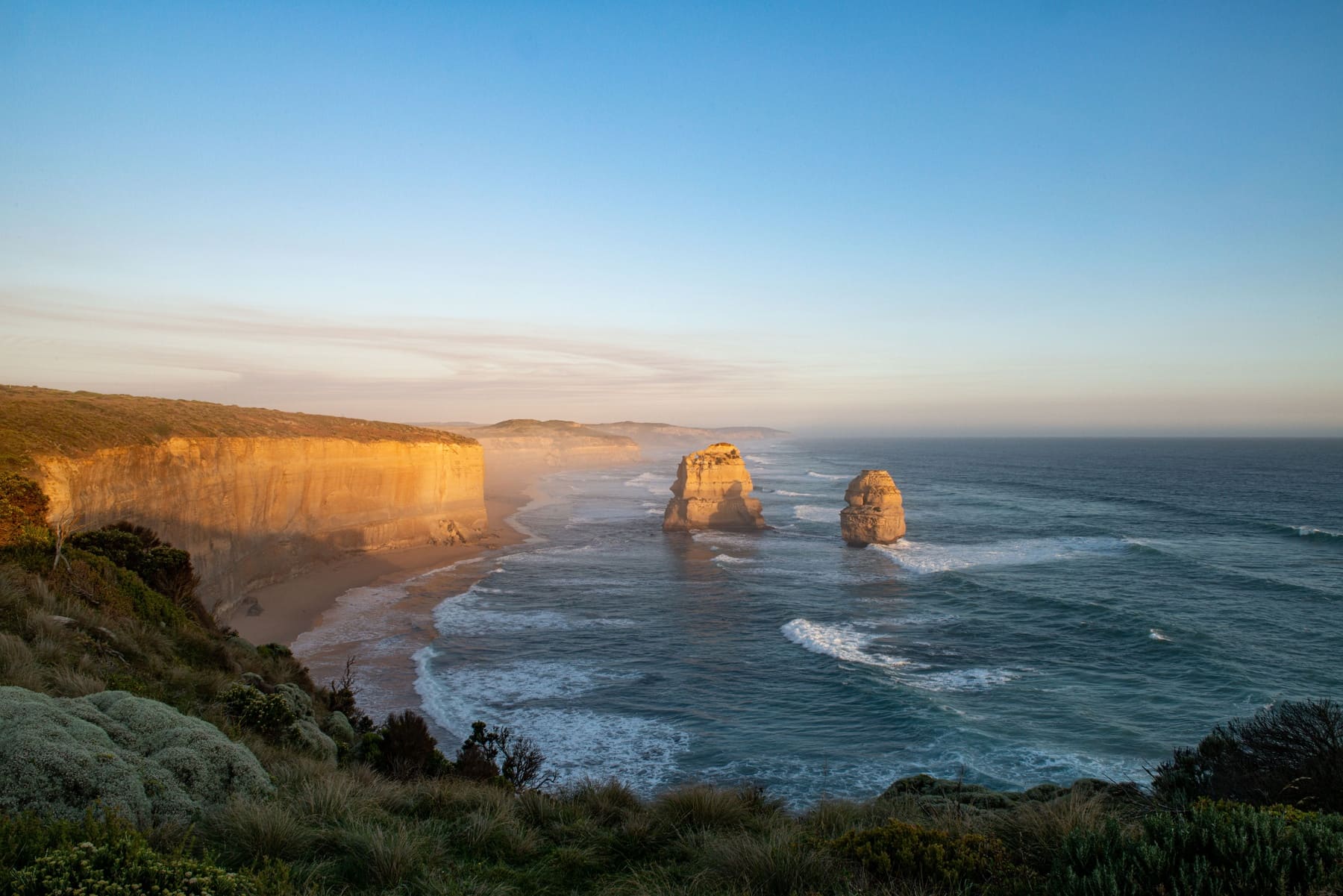
Great Ocean Road or an inland loop?
A coastal itinerary might start around the Surf Coast, then continue along the Great Ocean Road with time for lookouts, beaches and walking tracks. Roads can be winding and popular stops are spread out, so build in time to park and explore. Check official access and local weather before the trip.
If you have more days, consider returning inland via the Grampians (Gariwerd) for a different landscape. Confirm the status of walks, roads and campsites before committing to a route: conditions and closures can change. For a shorter rental, focus on one part of the coast and enjoy it rather than trying to include every landmark.
Prepare for Victoria's changing weather
Conditions can shift during the day, including in summer. Pack a waterproof layer, warm clothing and suitable walking shoes. Check fire warnings during hot periods and allow extra driving time in rain or strong wind. Shorter winter days also reduce the time available for sightseeing before arrival at camp.
Popular coastal camping areas can fill around school holidays and long weekends. Compare the facilities and rules of caravan parks, national park campgrounds and other permitted sites. Never assume that a scenic car park allows overnight camping.
Make a budget campervan trip work
Estimate your fuel using the actual route and allow for detours, then add campsite fees, park entry where applicable, meals and activities. Inland stays can sometimes offer alternatives to the busiest coastal stops, but compare current prices and travel distances rather than assuming a saving.
A return loop can avoid an interstate drop-off charge, while a one-way journey may make sense when it saves several days of backtracking. Compare both full itineraries and leave a buffer for bad weather or changed plans.